Quick Navigation
Introduction
Almost every homeowner planning kitchen designs in Gurgaon eventually runs into this debate, usually from two different directions at once. A friend swears by their carpenter, who’s built kitchens for three generations of the family and charges half of what the modular showroom quoted. Meanwhile, the modular kitchen dealer is showing you soft-close drawers, tandem boxes, and a 3D render that looks nothing like what your local carpenter can promise on paper.
Both sides have a point, and both kitchens can work well. The real question isn’t which one is objectively better, it’s which one actually suits your home, your budget, and how long you plan to live with the result. This guide breaks down modular and carpenter-made kitchens honestly, without the sales pitch from either side.
The Real Question Behind Modular vs Carpenter Kitchen
Most people frame this as modular versus carpenter kitchen when the more useful framing is: manufactured, engineered components versus site-built, hand-crafted components. That distinction is what actually drives every difference in cost, durability, timeline, and finish quality between the two.
Once you understand that difference, the decision becomes much easier to make for your specific kitchen, rather than following whichever option a friend or relative happened to choose.
In short: modular kitchens are factory-engineered and site-assembled. Carpenter-made kitchens are built on-site from raw materials, largely by hand.
What Is a Modular Kitchen?
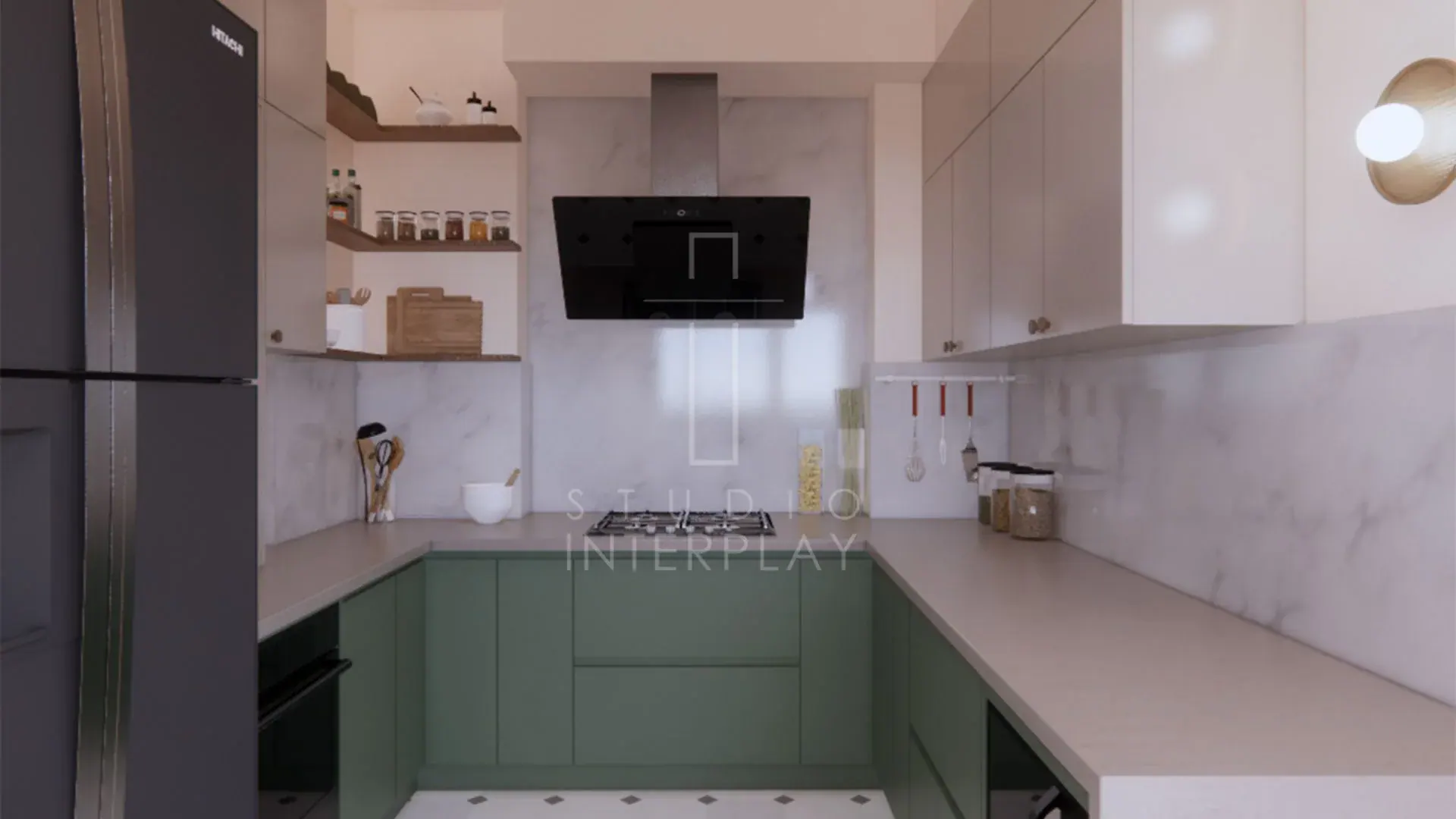
A modular kitchen is built from pre-engineered cabinet units, called modules, manufactured in a factory to standard or customised sizes, then transported to site and assembled. The carcass, shutters, hardware, and internal fittings are all factory-made to precise tolerances, which is why modular kitchens tend to have cleaner joints, smoother-running drawers, and more consistent finishes than site-built alternatives.
Modular kitchen design in Gurgaon has grown significantly over the past decade, largely because apartment living rewards precision. Factory-cut panels fit tighter, hardware like soft-close hinges and tandem drawers is integrated by design rather than added on, and the overall look tends to be sleeker and more contemporary.
What Is a Carpenter-Made Kitchen?
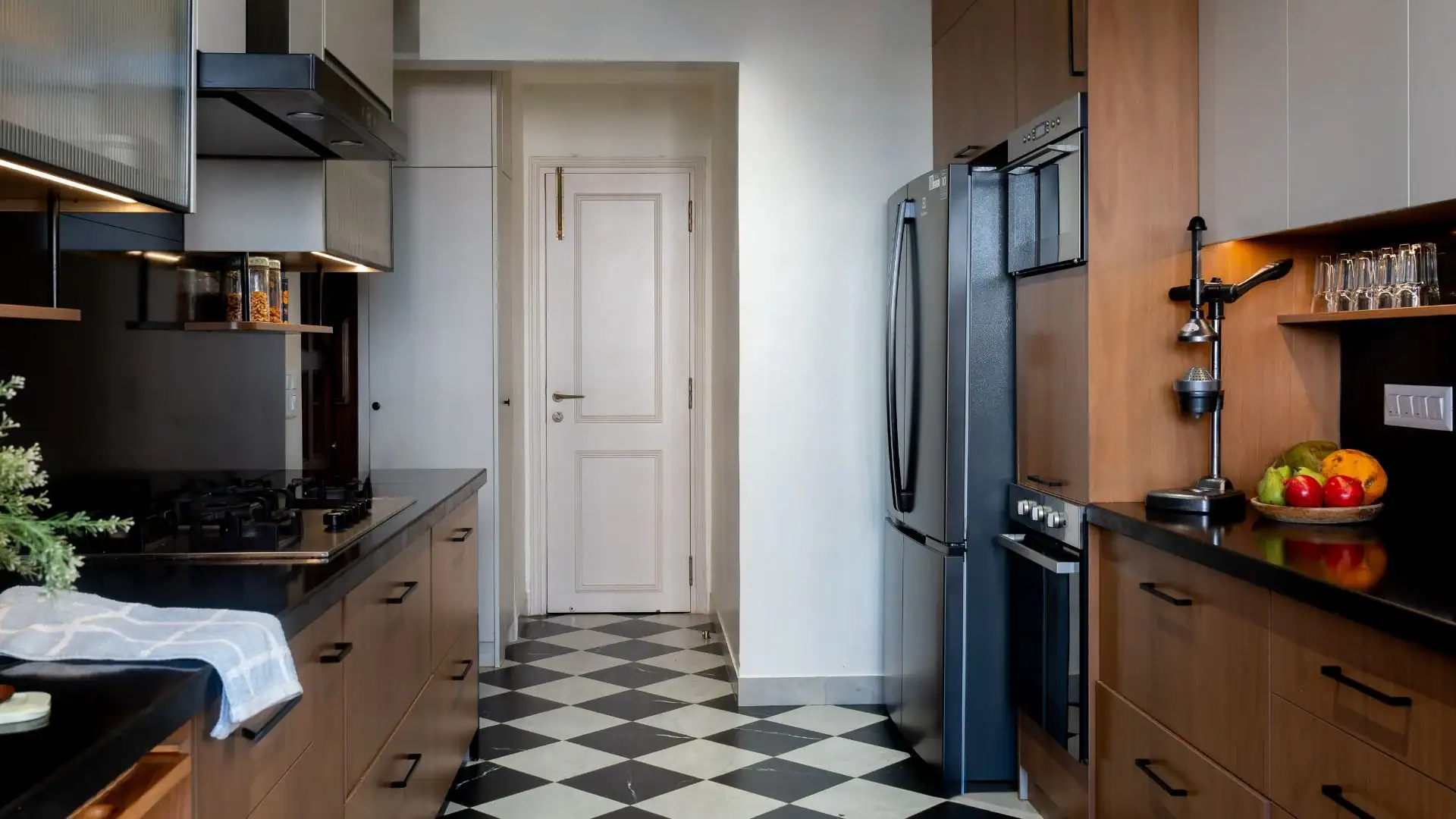
A carpenter-made kitchen is built on-site, largely by hand, using plywood, MDF, or solid wood sheets cut and assembled by a carpenter directly in your home. There’s no factory involved. Every cut, joint, and fitting is done on location, often over several weeks.
The appeal is real: a good carpenter can build almost anything, adapt on the fly if a wall isn’t perfectly straight, and often costs less upfront, especially for simpler layouts. Many Gurgaon builder floors and older homes were originally fitted with carpenter-made kitchens, and plenty of skilled carpenters in the region do genuinely solid work.
The trade-off is consistency. Hand-cut joints and site-applied finishes vary depending on the carpenter’s skill that particular day, and hardware is often fitted rather than integrated by design, which can affect how smoothly drawers and shutters operate over time.
Modular Kitchen vs Carpenter Kitchen: Side-by-Side Comparison
| Factor | Modular Kitchen | Carpenter-Made Kitchen |
| Manufacturing | Factory-made, precision-cut | Hand-built on site |
| Finish consistency | High, machine-finished | Varies by carpenter’s skill |
| Hardware integration | Built-in by design | Often added or retrofitted |
| Customisation for odd corners | Good, with custom modules | Very high, built to fit exactly |
| Upfront cost | Generally higher | Generally lower |
| Long-term durability | High, if good carcass material used | Depends heavily on carpenter’s material choices |
| Installation time | Faster once modules arrive | Slower, built from scratch on site |
| Warranty | Usually offered by manufacturer | Rarely formal, depends on individual carpenter |
| Design options (island, breakfast counter) | Easier to engineer precisely | Possible, but needs a highly skilled carpenter |
| Site mess and disruption | Lower, mostly assembly | Higher, cutting and finishing happens on-site |
Cost Comparison: Modular vs Carpenter-Made
| Kitchen Type | Basic | Mid-Range | Premium |
| Modular Kitchen | ₹2.5-4 lakhs | ₹4-7 lakhs | ₹7-11 lakhs+ |
| Carpenter-Made Kitchen | ₹1.8-3 lakhs | ₹3-5 lakhs | ₹5-8 lakhs+ |
Carpenter-made kitchens usually come in cheaper at the basic and mid-range tiers, since labour costs less than factory manufacturing overhead for simpler jobs. But the gap narrows at the premium end, since achieving modular-level finish and hardware quality by hand requires a highly skilled carpenter, who charges accordingly.
It’s also worth factoring in what happens after installation. Modular kitchens typically include a manufacturer warranty on hardware and shutters, while carpenter-made kitchens rarely come with formal warranty coverage, so any post-installation issues usually mean calling the same carpenter back and negotiating again.
Durability and Quality: Which Holds Up Better in Gurgaon Homes
This comes down almost entirely to material quality and workmanship, not which category the kitchen falls into. A modular kitchen built with a cheap carcass board will fail just as fast as a poorly built carpenter kitchen. A carpenter using BWP plywood and quality hardware can build something that lasts just as long as a mid-range modular kitchen.
That said, modular kitchens have a structural advantage: factory-cut panels and edge-banding seal the board’s exposed edges more precisely, which matters a lot in Gurgaon’s humidity, since exposed or poorly sealed edges are where moisture damage typically starts. Carpenter-made kitchens can achieve similar sealing, but it depends entirely on how carefully that specific carpenter finishes each edge, which varies job to job.
In short: durability is more about material grade and finishing precision than about modular versus carpenter as categories.
Design Flexibility: Straight, Island, and Small Kitchen Layouts
For a straight modular kitchen design, factory precision works particularly well, since a single-wall layout benefits from tight, consistent joints and integrated storage that maximises a limited run of cabinetry. This is one of the more budget-friendly modular configurations and suits smaller Gurgaon apartments well.
Small kitchen modular design also tends to favour the modular route, since manufacturers offer compact hardware, foldable fittings, and space-saving accessories engineered specifically for tight footprints, options a general carpenter may not have consistent access to.
Modular kitchen with island layouts genuinely benefit from modular engineering, since an island unit needs precise structural planning, often including plumbing or electrical routing through the floor, which factory-designed modules handle more reliably than an on-site, improvised build.
Carpenter-made kitchens still hold their own for highly irregular layouts, unusual angles, or heritage-style built-in cabinetry where a skilled carpenter can adapt to the exact wall conditions in ways that even custom modular units sometimes can’t match as elegantly.
Timeline and Execution Differences
A modular kitchen typically takes 3 to 5 weeks from final design sign-off to installation, since most components are manufactured off-site while the kitchen space is being prepared, and installation itself is largely assembly. A carpenter-made kitchen usually takes 5 to 8 weeks or longer, since every panel is cut, joined, and finished on location, which is inherently slower than assembling pre-made modules.
Site disruption also differs. Modular installation is comparatively low-mess, mostly involving fitting pre-made units into place. Carpenter-built kitchens involve ongoing cutting, sanding, and polishing on-site, which means more dust, more noise, and a longer period where the kitchen isn’t usable.
Which One Should You Choose?
Choose modular if you want factory-level finish consistency, integrated hardware with a formal warranty, faster installation, and you’re working with a fairly standard layout, including straight, L-shaped, or island configurations.
Choose carpenter-made if your budget is tighter, your layout has genuinely unusual angles or wall irregularities that need real-time adaptation, or you already have a carpenter with a proven, verifiable track record and are comfortable without formal warranty coverage.
For many Gurgaon homeowners, especially in apartments and builder floors with fairly standard room shapes, modular ends up being the more predictable choice simply because precision and consistency matter more in tighter spaces. For villas or homes with custom architectural detailing, a skilled carpenter working alongside a designer can sometimes deliver more tailored results.
Common Myths About Modular and Carpenter Kitchens
“Modular kitchens don’t last as long as carpenter-made ones.” This depends entirely on material grade, not the manufacturing method. A well-specified modular kitchen with BWP plywood and good hardware lasts just as long, often longer, than an average carpenter-made kitchen.
“Carpenter-made kitchens are always cheaper.” Only at the basic to mid-range tier. A highly skilled carpenter delivering modular-level finish and hardware quality often charges close to modular pricing.
“Modular kitchens can’t be customised.” Custom modular units are common, especially for corners, tall units, and islands. Customisation isn’t exclusive to carpenter-made kitchens.
“Carpenter kitchens have no design consistency.” A skilled, experienced carpenter working from proper drawings can deliver a genuinely well-finished kitchen. Quality depends on the individual, not the category.
How to Choose the Right Modular Kitchen Dealer in Gurgaon
If you’re leaning modular, a few checks help separate good modular kitchen dealers in Gurgaon from ones selling on showroom appeal alone. Ask for the exact carcass material, shutter finish, and hardware brands in writing, not just general terms. Visit a modular kitchen showroom near you and check the actual quality of drawer slides, hinge action, and edge-banding in person, not just the render.
Confirm whether the dealer offers a formal warranty, and what exactly it covers. Ask about installation supervision and whether their own team fits the kitchen or it’s outsourced. And ask to see completed kitchens in homes similar to yours, whether that’s an apartment, builder floor, or villa, since showroom displays don’t always reflect real installed results.
Modular kitchen manufacturers in Gurgaon vary widely in quality, so treating this decision with the same care as choosing a contractor, rather than picking based on showroom visuals alone, protects you from the most common post-installation regrets.
Final Thoughts
Modular kitchen designs in Gurgaon and carpenter-made kitchens both have a genuine place, and neither is universally right. Modular offers consistency, integrated hardware, and faster installation with formal warranty backing. Carpenter-made offers flexibility and often a lower entry cost, provided you’re working with a genuinely skilled carpenter and are comfortable without formal warranty coverage.
If you’re weighing this decision for your own kitchen, whether it’s a straight layout for a small apartment or a full island setup for a villa, Studio Interplay can walk you through both options honestly, based on your actual space and budget, not a fixed sales preference for one over the other.
FAQs
1. Is a modular kitchen better than a carpenter-made kitchen?
Neither is universally better. Modular kitchens offer more consistent finish quality, integrated hardware, and formal warranty coverage, while carpenter-made kitchens can offer more real-time adaptability and often a lower entry cost, depending on the carpenter’s skill.
2. Which is cheaper, modular or carpenter-made kitchen?
Carpenter-made kitchens are usually cheaper at the basic and mid-range tiers. The cost gap narrows significantly at the premium end, since matching modular-level finish and hardware by hand needs a highly skilled, and correspondingly priced, carpenter.
3. Does a modular kitchen last longer than a carpenter-made one?
Durability depends mainly on material grade and finishing precision, not the manufacturing method. A well-specified modular kitchen and a well-built carpenter kitchen using quality plywood can both last well over a decade.
4. Is modular kitchen design in Gurgaon suitable for small apartments?
Yes, small kitchen modular design is often a strong fit for compact Gurgaon apartments, since manufacturers offer space-saving hardware and accessories specifically engineered for tight footprints.
5. Can a carpenter build a straight modular-style kitchen?
Yes, a skilled carpenter can build a straight kitchen with a similar look, though achieving the same finish consistency and integrated hardware quality as a factory-made modular unit typically requires a highly experienced carpenter.
6. Is a modular kitchen with an island a good option for Gurgaon homes?
Yes, particularly for larger apartments, builder floors, and villas with enough space. Islands benefit from modular engineering since they often involve plumbing or electrical routing that factory-planned modules handle more reliably.
7. How long does a modular kitchen take to install compared to a carpenter-made one?
A modular kitchen typically takes 3 to 5 weeks from design sign-off to installation, while a carpenter-made kitchen usually takes 5 to 8 weeks or longer, since it’s built entirely on-site.
8. Do modular kitchens come with a warranty?
Most modular kitchen dealers and manufacturers offer a formal warranty on hardware and shutters, typically ranging from 1 to 5 years depending on the brand and components used. Carpenter-made kitchens rarely include formal warranty coverage.
9. What should I check before visiting a modular kitchen showroom near me?
Go in with your kitchen’s actual dimensions, a sense of your budget range, and questions about carcass material, hardware brands, and warranty terms, so you can compare the showroom’s claims against what’s actually being quoted for your space.
10. Can I mix modular units with carpenter-built elements in the same kitchen?
Yes, this is fairly common, particularly for unusual corners or custom features where a carpenter’s flexibility complements factory-made modular units for the main cabinetry runs.
11. Which is more mess-free during installation, modular or carpenter-made?
Modular installation is generally less disruptive, since most cutting and finishing happen off-site, and on-site work is largely assembly. Carpenter-made kitchens involve ongoing cutting and finishing on location, which creates more dust and noise.
12. How do I choose between modular kitchen dealers and manufacturers in Gurgaon?
Compare them on material transparency, hardware brands, warranty terms, installation supervision, and verified completed projects in homes similar to yours, rather than choosing based on showroom displays alone.

Co-Founder & Principal Designer at Studio Interplay
Palak approaches design as a dialogue between space and emotion. With a deep appreciation for materiality and detail, she creates interiors that reflect the people who inhabit them rather than the trends of the moment.