Quick Navigation
Vastu Shastra is a traditional Indian system of architecture that guides how a home is oriented, how its rooms are placed, and how space, light and the five elements (earth, water, fire, air and space) are balanced. For many families in Gurgaon and across Delhi NCR, Vastu is part of how a home is planned, even when the design brief is clean, contemporary and minimal.
The challenge is familiar. You want a home that follows Vastu Shastra, but you don’t want it to feel dated, crowded with symbolic objects, or planned around rules that ignore how you actually live.
The short answer: Vastu interior design works best as a planning layer, not a style. Most Vastu principles can be applied through layout, furniture placement, colour, light and materials, which means a home can be Vastu-friendly and still look completely modern.
This guide covers practical ways to bring Vastu into a contemporary home, room by room, along with the mistakes worth avoiding.
A quick note on approach: Vastu is a traditional belief system, and its claimed effects on wellbeing or prosperity aren’t scientifically established. Many of its core ideas, though, such as good daylight, cross ventilation, open circulation and uncluttered rooms, are simply good design. That overlap is where modern Vastu is most useful.
Can Vastu Shastra Work With Modern Interior Design?
Yes. Vastu Shastra for home planning is mostly about where things go and how a space feels, not about a particular look. Its principles show up in decisions about:
- Space planning and room placement
- Furniture arrangement
- Colours and finishes
- Lighting and ventilation
- Materials and natural elements
- Décor
None of these require carved wood, heavy brass or traditional motifs. A home with flat-panel cabinetry, a neutral palette and minimal décor can follow Vastu as closely as a traditional one.
What You Can Change vs What You Work With
Most homeowners in Delhi NCR live in apartments or builder floors where the structure is already fixed. Separating the two helps you focus effort where it matters.
| Usually fixed in a built apartment | Usually flexible through interiors |
|---|---|
| Main door position | Entrance lighting, décor, storage |
| Room positions (kitchen, bedrooms, toilets) | Furniture placement within each room |
| Window positions | Curtains, blinds, light colours, mirrors |
| Column and beam locations | False ceiling design, bed and desk placement |
| Plot orientation | Colour palette, materials, plants |
If you’re building a new home or villa, orientation and room placement can be planned from the start with an architect. If you’re furnishing or renovating a flat, the right column is where most of your Vastu decisions will happen.
10 Vastu Interior Design Ideas for Modern Homes
1. Keep the Entrance Welcoming and Clutter-Free
In Vastu, the main entrance is treated as the point where energy enters the home. North, east and northeast facing entrances are traditionally the most favoured, although many practitioners also accept other directions depending on the exact position of the door along that wall.
If your Vastu entrance for home is already fixed, the interior still matters:
- Keep the entryway unobstructed. Shoe racks work best as closed, slim units placed to the side rather than directly in front of the door.
- Light it well. A warm, layered light at the entrance makes the arrival feel calm.
- Keep the door in good condition, with no creaking hinges or damaged finishes.
- Many practitioners advise against placing a mirror directly facing the main door.
- A clean nameplate, a console and one considered artwork are enough. The entrance doesn’t need symbolic objects to feel welcoming.
2. Plan a Balanced, Open Living Room
Vastu for living room planning traditionally favours the north, east or northeast parts of the home. Within the room, the guidance is practical:
- Place heavier seating along the south or west walls, so people sitting face north or east.
- Keep the northeast corner of the room lighter and less crowded.
- Leave the middle of the room relatively open for movement.
- Let daylight in. Sheer curtains keep privacy without blocking light.
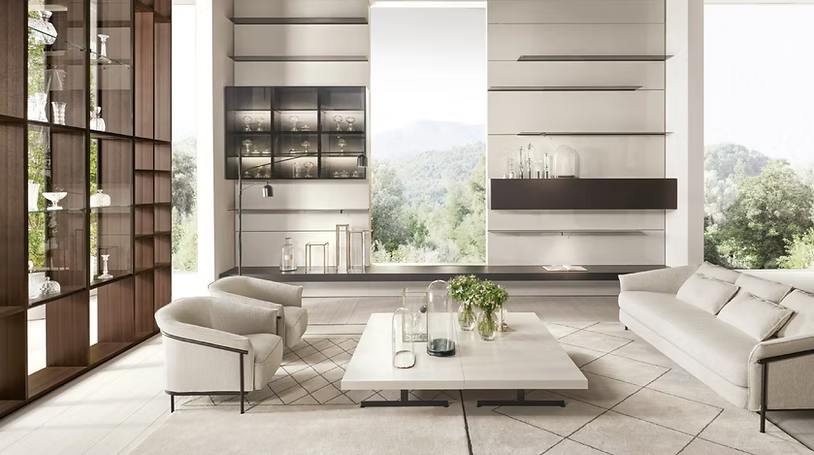
In a modern home, this often means a low-profile sofa against the solid wall, a slim media unit, and a rug that defines the seating zone without filling the floor. The room feels open because it is open, and that’s what the principle is asking for.
3. Design a Calm, Restful Bedroom
For a Vastu bedroom, the master bedroom is traditionally placed in the southwest of the home. Inside the room, commonly followed guidelines include:
- Position the bed so your head points south or east while sleeping.
- Place the bed against a solid wall, not under a beam.
- Avoid a mirror directly facing the bed. A mirrored wardrobe shutter can be swapped for a fluted glass or laminate finish.
- Keep wardrobes and heavier storage on the south or west walls. A well-planned modular wardrobe makes this easier, because the size and shutter finish can be designed around the wall you have.
For colour, soft, calm tones suit the purpose of the room: muted blues, sage greens, warm greys, earthy neutrals and blush tones. Intense reds or very dark walls across the whole room are usually avoided.
4. Plan the Kitchen Around Vastu Principles
Kitchen design Vastu Shastra guidance is among the most specific, because the kitchen is linked to the fire element.
- Placement: The southeast is traditionally preferred, with the northwest as a common alternative. The northeast is usually avoided.
- Cooking direction: Facing east while cooking is widely recommended.
- Fire and water: The hob (fire) and sink (water) are ideally not placed directly next to or opposite each other.
- Storage: Tall units and heavier storage sit well on the south or west walls.
- Ventilation: A window or exhaust and a good chimney keep the kitchen fresh.
A modular kitchen is well suited to this. Because counters, tall units and appliance zones are custom planned, the hob can sit on the southeast run, the sink toward the northeast side of the kitchen, and a counter gap or tall unit can separate them, all within a clean, handleless contemporary design.
5. Use Vastu Colours Without Making the Home Look Dated
Traditional Vastu Shastra colors for living room walls are light and warm: white, cream, beige, soft yellow and pale green. These happen to be the base of most modern palettes, so the conflict is smaller than people expect.
To keep the result contemporary:
- Use warm white or greige as the main wall colour.
- Bring in the “Vastu colour” through an accent wall, upholstery or a rug rather than every wall.
- Choose muted versions: sage instead of parrot green, ochre instead of bright yellow, terracotta instead of red.
- Let natural finishes (oak, travertine, linen) add warmth so the palette doesn’t feel flat.
Bright or dark colours aren’t forbidden. They simply work better in small doses rather than across large surfaces.
6. Maximise Natural Light and Ventilation
Vastu places strong emphasis on light from the north and east and on air moving freely through the home. This is also where Vastu and practical design for Delhi NCR align closely. Morning light from the east is gentle, while the west and southwest take the harsh afternoon sun through the long summer.
Practical moves:
- Keep north and east windows clear of tall furniture.
- Use light curtains on the north and east; heavier, lined or blackout curtains on the west.
- Plan for cross ventilation where openings exist on opposite sides.
- Choose light, matte wall finishes that bounce daylight deeper into the room.
- Where daylight is limited, use layered lighting (ambient, task and accent) rather than one bright ceiling fixture.
7. Bring Nature Into the Interior
Natural elements are central to Vastu, and they suit modern interiors well. Commonly followed Vastu Shastra plants for home include:
- Tulsi: traditionally placed in the north, east or northeast, often on a balcony.
- Money plant: commonly placed in the southeast.
- Tall, heavy planters: better on the south or west side.
- Thorny plants such as cacti: usually kept outdoors rather than inside.
Beyond plants, Vastu decoration for home can come through wood, stone, cane, jute and linen. Dry or dying plants should be replaced promptly, since they undo the purpose.
8. Keep the Centre of the Home Open
The centre of a home is called the Brahmasthan in Vastu. It is traditionally kept open, light and free of heavy structures.
You don’t need to rebuild your home to respect this. In a modern apartment, the centre is often the living and dining zone, so:
- Avoid heavy furniture or a large storage unit in the middle of the plan.
- Keep circulation paths clear and comfortable.
- Use low furniture and open shelving to keep sightlines open.
- Choose a light ceiling treatment in this zone rather than a heavy dropped design.
The result is a home that feels spacious and easy to move through, which is good planning with or without Vastu.
9. Choose Furniture and Décor With Balance in Mind
Vastu favours balance: heavier elements toward the south and west, lighter elements toward the north and east. In practice:
- Match furniture size to the room. Oversized pieces make a room feel heavy.
- Use symmetry where it suits the space, such as paired side tables or lamps.
- Prefer natural materials and solid, stable pieces.
- Limit décor to a few meaningful objects rather than many small ones.
- Artwork with calm, natural themes is commonly preferred over aggressive or sad imagery.
10. Let Your Personal Style Lead
A Vastu-friendly home doesn’t have to look like every other Vastu-compliant home. The principles guide placement and balance; the style is yours.
- Contemporary: clean lines, a neutral base, one strong material.
- Minimalist: naturally aligned with Vastu’s preference for open, uncluttered space.
- Luxury: marble, brass accents and rich textures, placed with balance in mind.
- Scandinavian-inspired: light woods, soft whites and plenty of daylight.
- Indian contemporary: handcrafted textiles and local materials in a modern layout.
This is the idea behind modern Vastu: the principles are built into the plan, and the aesthetic is built around the people who live there.
Vastu Ideas for Home: A Room-by-Room Quick Reference
| Area | Traditionally preferred zone | Modern design move |
|---|---|---|
| Entrance | North, east or northeast. | Slim closed shoe storage, warm layered lighting, clear approach. |
| Living room | North, east or northeast. | Heavy seating on south or west wall, open centre. |
| Master bedroom | Southwest. | Head toward south or east, no mirror facing the bed. |
| Kitchen | Southeast (northwest as alternative). | Hob on southeast run, cook facing east, hob and sink separated. |
| Dining area | West, or near the kitchen. | Clear circulation around the table, warm pendant lighting. |
| Bathroom | West or northwest; avoid northeast. | Strong exhaust, light finishes, closed storage. |
| Home office | Desk facing north or east. | Solid wall behind the chair, good task lighting. |
| Balcony | North or east. | Light furniture, tulsi and small planters. |
| Pooja space | Northeast. | Compact wall unit or niche in a calm corner. |
In a built apartment, some rooms won’t match the preferred zone. In that case, focus on what you can control inside each room.
Common Vastu Mistakes in Modern Interiors
- Overloading the home with Vastu objects. Too many pyramids, crystals and symbols create clutter, which works against Vastu’s own emphasis on openness.
- Choosing colours only because they’re “Vastu colours.” A shade that clashes with your materials or light won’t make the room feel balanced.
- Ignoring light and ventilation. Placement rules matter less if the room is dark and stuffy.
- Sacrificing function for rigid rules. A kitchen that is Vastu-aligned but awkward to cook in isn’t a good kitchen.
- Applying generic rules without looking at your layout. Advice written for independent houses doesn’t always translate to a 12th-floor apartment.
- Treating every recommendation as universal. Practitioners differ on details, so prioritise the principles that matter most to your family.
- Making structural changes without a professional. Moving a kitchen or toilet affects plumbing, waterproofing and society approvals.
How to Plan a Modern Home According to Vastu
Good home design according to Vastu balances four things: Vastu principles, functionality, aesthetics and lifestyle. When one of these takes over completely, the home usually suffers.
A practical sequence looks like this:
- Map the home. Note directions with a compass and mark the centre, the entrance and each room’s zone.
- Separate fixed from flexible. Decide what is structural and what interiors can adjust.
- Agree on priorities as a family. Decide which Vastu principles matter most to you, and whether you’ll consult a Vastu practitioner.
- Plan furniture and storage. Place beds, sofas, wardrobes and the kitchen run with both Vastu and daily use in mind.
- Choose palette and materials. Start from light, natural bases and add personality through texture.
- Plan light and air. Treat window coverings, lighting layers and ventilation as part of the design.
- Edit the décor. Keep what is meaningful and remove what crowds the space.
For a new home, this process begins at the architecture and planning stage, where orientation and room positions can still be chosen. For an existing flat, a home renovation can address most Vastu concerns through layout and interiors, with structural changes kept to a minimum.
At Studio Interplay, interior design with Vastu Shastra is approached the same way as any other brief: by understanding how a family lives, what they value, and how the space can support both, so Vastu becomes part of the plan rather than a set of rules applied afterwards.
Frequently Asked Questions About Vastu Interior Design
1. What is Vastu interior design?
Vastu interior design applies the principles of Vastu Shastra, a traditional Indian system of architecture, to a home’s interiors. It guides furniture placement, colours, lighting, materials and room use to create balanced, well-lit and uncluttered spaces.
2. Can a modern home be designed according to Vastu Shastra?
Yes. Vastu concerns placement and balance rather than a visual style, so contemporary, minimalist and luxury interiors can all follow its principles.
3. Which direction is best for the main entrance according to Vastu?
North, east and northeast facing entrances are traditionally considered the most favourable. Many practitioners also accept other directions depending on the door’s exact position along the wall.
4. Which colours are suitable for a Vastu-friendly living room?
Light, warm colours such as white, cream, beige, soft yellow and pale green are commonly recommended. Using them as a neutral base with muted accents keeps the room modern.
5. How should furniture be arranged according to Vastu?
Heavier furniture is traditionally placed along the south and west walls, while the north, east and centre of a room are kept lighter and more open.
6. How can I follow Vastu without changing my home’s layout?
Focus on what interiors can control: furniture and bed placement, kitchen counter planning, colours, lighting, curtains, plants and decluttering. Structural changes are rarely necessary for a meaningful improvement.
7. Can minimalist interiors follow Vastu Shastra?
Yes. Minimalism’s emphasis on open space, natural light and fewer objects aligns closely with Vastu’s own principles.
8. Should I consult a Vastu expert before designing my home?
If Vastu is important to your family, consulting a practitioner early helps set clear priorities. Your interior designer can then translate those priorities into a functional, well-designed layout.
Final Thoughts
Vastu and modern design don’t have to compete. The strongest ideas in Vastu Shastra interior design, such as open centres, good daylight, calm bedrooms, well-planned kitchens and uncluttered rooms, are also the qualities that make a contemporary home feel good to live in.
The goal isn’t to follow every rule. It’s to plan a home where tradition, comfort and personal style sit together naturally.
If you’re planning a new home or a renovation in Gurgaon or elsewhere in Delhi NCR, Studio Interplay can help you design a space that respects the Vastu principles important to your family while reflecting how you want to live. Explore our interior design services in Gurgaon to start the conversation.

Co-Founder & Principal Designer at Studio Interplay
Palak approaches design as a dialogue between space and emotion. With a deep appreciation for materiality and detail, she creates interiors that reflect the people who inhabit them rather than the trends of the moment.