Quick Navigation
There is something genuinely exciting happening in Indian house architecture design right now. After decades of homes that either leaned heavily on Western references or defaulted to generic builder-grade construction, a new generation of architects and homeowners is asking a more interesting question: what does a modern Indian home actually look like when it’s designed for the way we live, in the climate we live in, rooted in the culture we come from?
The answer is producing some of the most thoughtful residential architecture the country has seen, and it’s within reach for anyone willing to invest in the right design process. This guide covers the ideas, principles, and approaches that define the best modern house designs in India today.
The Shift Happening in Indian Home Architecture Design
For a long time, “aspirational” Indian home design meant importing aesthetics: Mediterranean villas, American colonial, and European classical. These styles were applied to Indian plots, Indian climates, and Indian family structures with predictably awkward results. Homes that looked expensive in photographs but felt wrong to live in.
The shift happening now is a move toward architecture that is both modern and genuinely Indian, not in a decorative sense, but in a structural and spatial one. Homes that respond to how Indian families actually live: multigenerational in many cases, socially generous, built around gathering, and deeply connected to the rhythms of the domestic day.
The best home architecture design today draws from Indian spatial traditions, the courtyard, the verandah, the transition between public and private, and reinterprets them with contemporary materials, clean lines, and thoughtful environmental design.
Design Ideas That Define Modern Indian Homes in 2025
The Reimagined Courtyard
The courtyard is perhaps the most enduring spatial idea in Indian architecture. It was the heart of the traditional home; a space for light, ventilation, family life, and the connection between indoors and out.
In modern house design, the courtyard has been reinterpreted beautifully. It no longer needs to be a fully enclosed square in the centre of the plan. It can be:
- A light well that brings natural light deep into a compact home.
- A landscaped garden zone that opens the living area to the outside.
- A double-height void that creates drama and ventilation in a villa.
- A partially covered transitional space between the kitchen and the garden.
When designed well, even a modest courtyard element transforms the experience of a home, reducing the reliance on artificial lighting and air-conditioning while creating a spatial richness that no interior finish can replicate.
Climate-Responsive Architecture – The Design Principle Most Blogs Ignore
This is one of the most important aspects of Indian house architecture design and one that competitor blogs almost never discuss. India has one of the most climatically diverse landscapes in the world. What works architecturally in Gurugram does not automatically work in Kochi, Ahmedabad, or Shimla.
Thoughtful residential architecture design in India is climate-first:
- North India plains (Delhi NCR, Gurugram): Deep overhangs and brise-soleil to manage harsh summer sun; orientation to capture winter sun; cross-ventilation corridors in layout planning.
- Coastal regions: Elevated structures, louvred facades, and materials that resist humidity.
- Hilly terrain: Sloped roofs for rainfall, materials that insulate against cold, deep-set windows for warmth.
A home that ignores its climate will always underperform, both in comfort and in energy efficiency. An architect who understands this designs homes that feel good to live in year-round, not just on the day they’re photographed.
The Modern Indian Facade: Honest Materials, Clean Lines
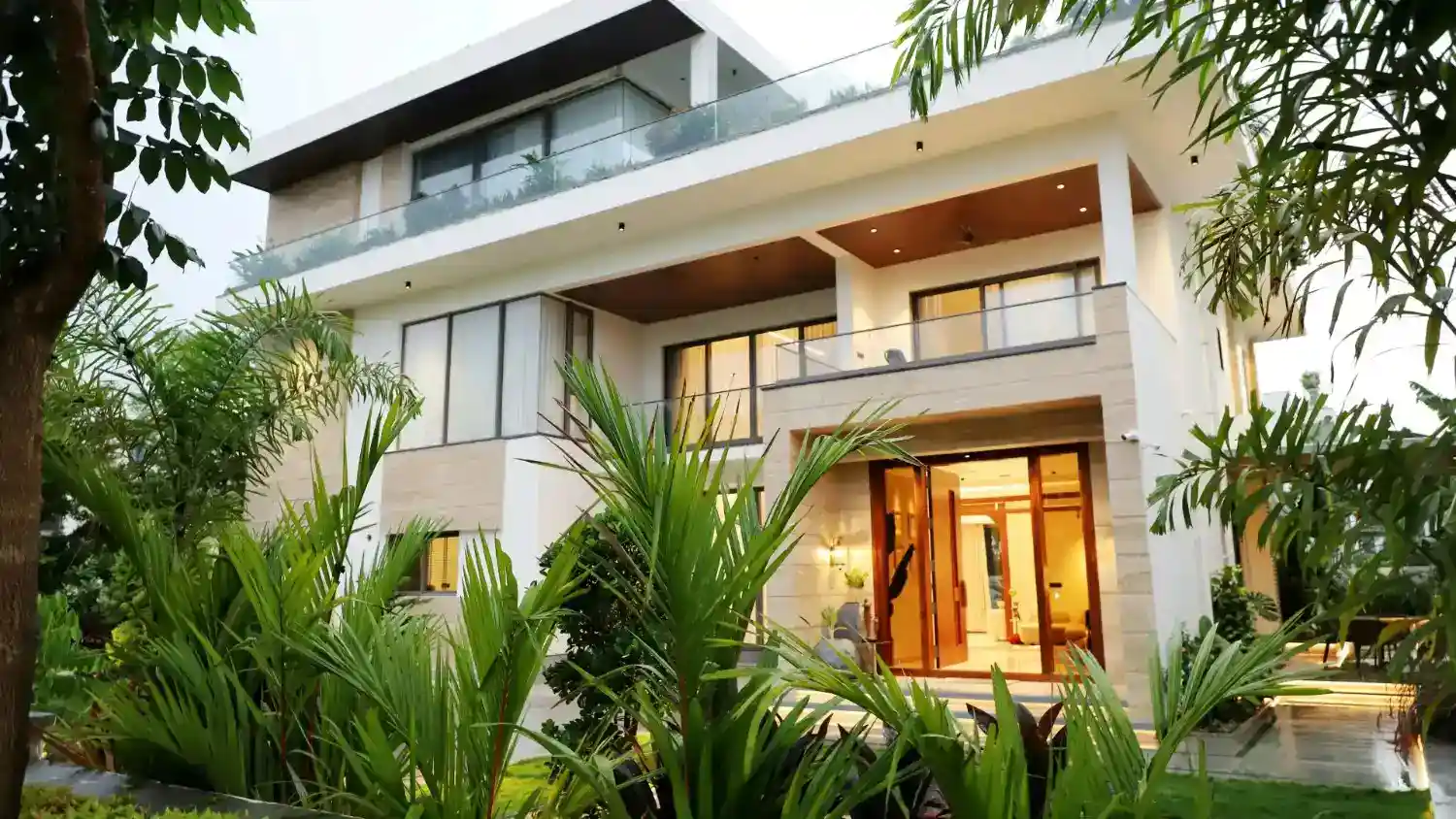
The exterior of a home is its first act of communication. In the best house designs Indian style today, facades are honest about their materials, exposed brick, textured concrete, natural stone cladding, and warm wood elements, rather than covered in paint that ages poorly and reveals nothing about what the home actually is.
Clean geometric forms, deliberate fenestration (windows placed for light and view, not just proportion), and a restrained material palette are the hallmarks of contemporary Indian home design that ages well rather than dating quickly.
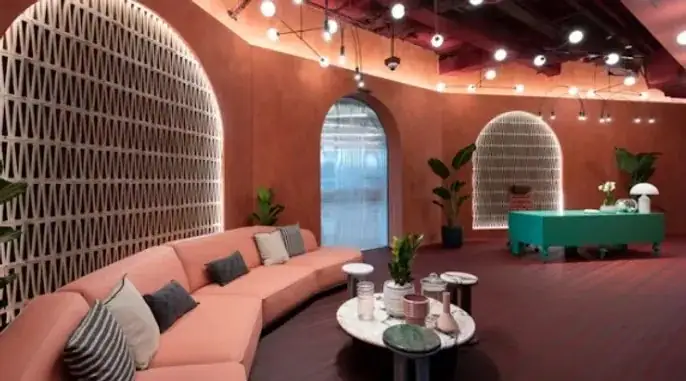
Jali screens, the traditional latticework found in Mughal and Rajasthani architecture, have made a strong return, now executed in modern materials like laser-cut metal or precast concrete. They add texture, manage solar gain, and carry a cultural resonance that imported design references simply cannot.
Architecture and Interior Design as One Continuous Act
One of the most common and most expensive mistakes in residential projects is treating architecture and interior design as sequential phases, get the structure built, then figure out the inside.
The finest homes in India today are designed from the outside in and the inside out simultaneously. The ceiling height of a living room is an architectural decision that determines how furniture can be arranged and how a space feels to inhabit. The position of a window is an architectural decision that determines where natural light falls and what view a resident sees from their bed in the morning.
Indian house interior design and architecture are not two disciplines that hand off to each other. In the best projects, they’re held by the same mind, or the same closely integrated team.
What to Look for in Residential Architecture Design Services
If you’re planning a home, these are the qualities that distinguish excellent architectural design services from competent but average ones:
- Climate and site responsiveness: Does the design work with the orientation and weather of your specific location?
- Material honesty: Are materials chosen for how they age and perform, or just how they photograph?
- Integration of architecture and interiors: Is the interior experience considered from the first sketch, or treated as a later addition?
- Cultural rootedness: Does the design draw meaningfully from Indian spatial traditions, or is it imported aesthetics applied to an Indian address?
- Spatial generosity: Does the home feel larger and more connected than its square footage would suggest – a hallmark of intelligent space planning?
Why Studio Interplay’s Approach to Indian Home Design Works
Studio Interplay is a Gurugram-based architecture and interior design studio founded by principal architect Aditya Puri and principal designer Palak Ranpura. Their approach to Indian house architecture design is rooted in a clear philosophy: every home should belong to its place, its climate, and the people who live in it.
Aditya brings deep architectural intelligence to each project – site orientation, spatial planning, structural honesty, and a sensitivity to how Indian family life actually unfolds within a home. Palak brings material warmth and interior depth, ensuring that what the architecture creates on the outside is equally considered on the inside.
Their residential work across Gurugram, Delhi, and Noida reflects this integration consistently – architect home designs where the facade, the spatial sequence, and the interior finish are clearly the work of a single coherent vision. Not three separate decisions made by three separate teams.
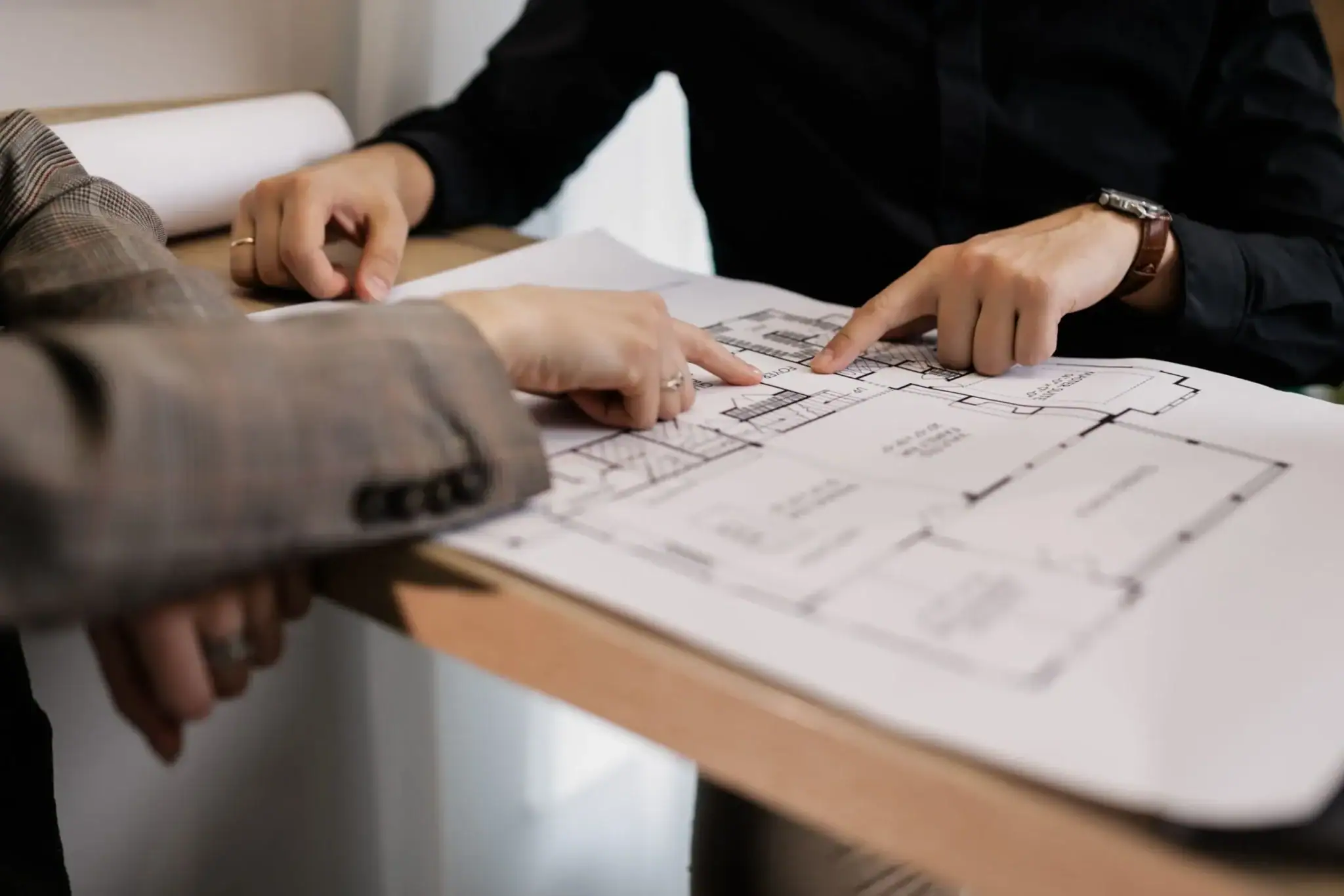
Their architectural design services cover the full project lifecycle: discovery and briefing, site analysis, concept development, 3D visualisation, working drawings, material specification, and active site supervision through to handover. Budgets are transparent. Timelines are set and held. And the relationship is personal – Aditya and Palak remain involved throughout, not as occasional reviewers but as active participants in making the project right.
Your Dream Home Deserves Architecture That Truly Belongs to You
The best Indian homes being built today don’t look like they were designed anywhere else. They feel rooted in their landscape, their climate, and the lives of the people who inhabit them. Achieving that requires more than a good-looking facade. It requires an architect who understands India, understands you, and has the skill to bring those two understandings together in a single, coherent design.
Studio Interplay builds exactly those homes. If you’re ready to begin the most important design conversation of your life, the right team is here.
Frequently Asked Questions
Q1: What defines modern Indian house architecture design?
Modern Indian architecture combines clean, contemporary forms with spatial ideas rooted in Indian tradition, courtyards, transitional spaces, climate-responsive design, and materials that are honest and locally resonant. It’s neither a copy of Western styles nor a revival of traditional forms, but a genuine synthesis of both.
Q2: How important is climate in home architecture design in India?
Extremely important, and frequently underestimated. India’s climate varies enormously across regions. Architecture that ignores orientation, solar gain, ventilation, and seasonal variation will always underperform in comfort and energy efficiency. The best residential architects in India design for the climate first.
Q3: What is the difference between architect home design and interior design?
Architecture addresses structure, spatial layout, natural light, climate response, and the building envelope. Interior design addresses how finished spaces feel, function, and look. The best homes are produced when both are integrated from the beginning, not designed sequentially by separate teams.
Q4: What should I expect from residential architecture design services?
A thorough discovery process, site analysis, concept development, detailed 3D visualisation, working drawings, material specification, and site supervision through construction. Anything less than this full scope leaves decision-making gaps that consistently produce inconsistencies in the finished home.
Q5: How does Studio Interplay approach Indian home design differently?
Studio Interplay integrates architecture and interior design under one team, with both founders personally involved throughout each project. Their work is climate-aware, materially considered, and designed around how their specific clients live – not adapted from a house style applied uniformly across projects.
Q6: How long does a residential architecture project typically take in India?
From initial design to construction completion, a full residential project typically takes 12 to 24 months, depending on scope. Studio Interplay sets realistic timelines from the first consultation and maintains clear communication throughout every stage.

Co-Founder & Principal Designer at Studio Interplay
Palak approaches design as a dialogue between space and emotion. With a deep appreciation for materiality and detail, she creates interiors that reflect the people who inhabit them rather than the trends of the moment.