Quick Navigation
Colour Theory Basics: How To Use Color Theory in Interior Design?
A Brief Introduction to Colour Theory
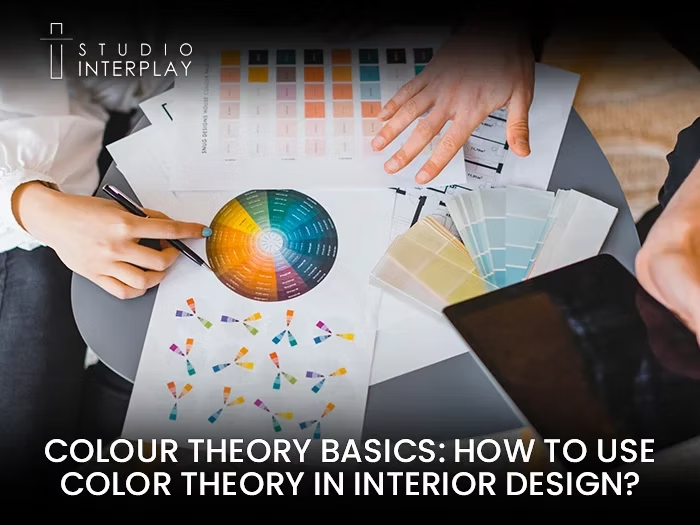
By now, even amateurs have understood how fundamental choosing the right colour is for ensuring a promising interior design. With the right colour picks, you will notice how seamlessly your furnishings, furniture, and decor unify. Moving on to the original colour theory, to understand this, we first need to know about the colour wheel. This is an accommodating tool that represents the linear spectrum of visible light (the colours found in the rainbow from red to violet) and connects the ends of the line to create a circle. This wheel was developed by scientists and artists and even attributed to Sir Isaac Newton. Therefore, by now you must have comprehended how this is not your regular colour palettes with random shades but a comprehensive framework and foundation for artists and designers.
Key Elements of Colour Theory
- Hue: The name of a colour (red, blue, etc.)
- Value: The lightness or darkness of a colour.
- Intensity (Chroma): The purity or strength of a colour.
- Tints: Lighter versions of a hue created by adding white.
- Shades: Darker versions of a hue created by adding black.
Some features that designers focus on while defining colour theory in interior design are:
Hue: The name of the colour (red, blue, etc).
Value: The lightness or darkness of the colour that is defined by the amount of light the colours reflect.
Intensity or Chroma: This is the degree of strength or purity.
Tints: This is a lighter colour tone than the normal value of the pure hues in the colour wheel.
Shades: This is a darker colour tone than the normal value of the pure hues in the colour wheel.
Methods to Incorporate Colour Theory Basics in Your Home Interior
1. Understanding the Colour Wheel
To understand interior designing colours better, check out the three categories of the colour wheel:
Primary Colours: These comprise blue, red, and yellow.
Secondary Colours: Formed by mixing primary colours such as green, orange, and purple.
Tertiary Colours:Created by mixing a primary and a secondary colour in varying ratios.
2. Choosing Your Colour Family
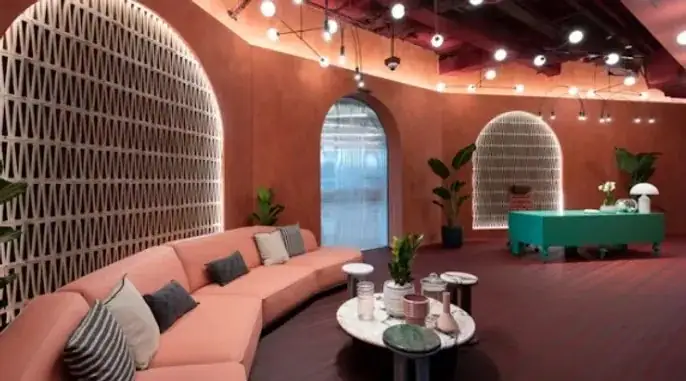
Now that you know the colour wheel, understand which one would be your ideal colour family. For a warmer tone, go for reds, yellows, oranges, browns, and more. For a cooler vibe, go for blues, purples, greys, and more. While warm tones bring out an energetic feel, the cooler ones offer relaxation.

3. Coordinating Ceilings and Walls
4. Creating Flow with Rugs and Flooring
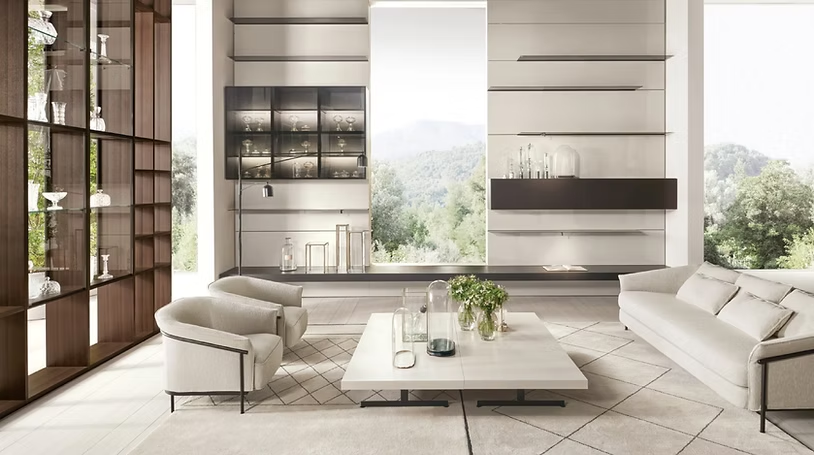
5. Embracing Neutral Colours Like Grey
6. The 60-30-10 Rule
Common Colour Mistakes to Avoid
- Overusing bold colours without balance can make a space feel chaotic.
- Ignoring natural lighting can distort how colours appear.
- Using too many colours reduces visual harmony.
- Not testing paint samples before finalising choices can lead to mismatches.
Conclusion
The world of interior colours is no longer a mystery. With a solid understanding of colour theory, you can confidently design spaces that reflect your personality and desired mood.
Remember, colour theory is a guideline, not a strict rulebook. Experiment, trust your instincts, and enjoy the creative process. If needed, professional designers can help bring your vision to life.
FAQ’s
1. What are the primary, secondary, and tertiary colours, and how are they formed?
Primary colours (red, yellow, and blue) cannot be blended with others. Secondary colours (orange, green, and purple) are created by combining primary. Tertiary colours (red-orange, yellow-green, etc.) are a combination of primary and secondary colours. These mixtures produce a wide range of colours.
2. How do hue, value, and intensity affect colour perception in a room?
Hue (colour), value (lightness/darkness), and intensity (brightness) all influence how we see colours in a room. Colour theory enables designers to employ these aspects to achieve specific moods. For example, brighter values and cooler hues make a place feel more open, whereas darker values and warmer hues produce a cosier feeling.
3. What is the 60-30-10 rule in interior design, and how is it applied?
The 60-30-10 rule serves as a colour palette guide. To achieve a harmonious and coherent effect in interior design, use 60% of a dominating colour, 30% of a secondary colour, and 10% of an accent colour.
4. How do warm and cool colour families impact a room’s atmosphere?
Warm colours (red, orange, and yellow) evoke feelings of energy and enthusiasm, whereas cool colours (blue, green, and purple) foster feelings of peace and relaxation. Using these temperature-based colour families can have a major impact on a room’s atmosphere.
5. How can I add colour without repainting walls?
You can introduce colour through furniture, cushions, rugs, artwork, and curtains. Accent pieces are a flexible way to experiment with colour trends without committing to permanent changes.

Co-Founder & Principal Designer at Studio Interplay
Palak approaches design as a dialogue between space and emotion. With a deep appreciation for materiality and detail, she creates interiors that reflect the people who inhabit them rather than the trends of the moment.