Quick Navigation
Instead of focusing only on aesthetics and function, commercial interiors are now expected to deliver experience, flexibility, and long-term usability. Businesses want spaces that can adapt as teams change, customer habits shift, and technology evolves, something an interior design company can strategically plan from the start.
This guide explores the forces shaping commercial interiors today and how those ideas translate into offices, retail environments, and co-working spaces.
The Forces Shaping Commercial Interiors in 2026
Designing Around Human Experience
One of the clearest shifts in commercial design is the move toward people-focused environments.
For many years, workplace layouts were driven mainly by efficiency and hierarchy. Today the priority has shifted toward how spaces support comfort, productivity, and wellbeing often guided by an experienced interior design consultant.
Modern commercial interiors therefore emphasize:
- Ergonomic furniture and workstation planning
- Improved acoustics that reduce noise fatigue
- Access to daylight and better air circulation
- Layouts that support both collaboration and quiet work
These elements are no longer treated as luxury upgrades. They are becoming baseline expectations.
Spaces That Reflect Brand Identity
Brand identity is increasingly expressed through the physical environment itself.
Rather than relying on signage or graphics alone, many companies now embed their brand language directly into spatial design. Materials, lighting tone, circulation flow, and furniture choices all contribute to how a brand is perceived.
A well-designed commercial space communicates personality without needing obvious branding everywhere.
A simple test often used by designers is this: if all logos were removed from the space, would visitors still recognize the brand’s character?
Sustainability and Wellbeing
Environmental responsibility has become a practical design priority rather than a marketing statement.
Businesses are adopting materials and systems that support healthier environments while also reducing operational impact. Examples include low-emission materials, efficient lighting systems, thoughtful HVAC planning, and modular construction methods that reduce waste.
The goal is to create spaces that are both environmentally responsible and comfortable for everyday use.
Office Interior Design Trends
Wellness Built Into Everyday Workspaces
Workplace wellness is shifting away from decorative ideas toward measurable improvements in comfort.
Many offices now prioritize lighting that supports long working hours, ventilation systems that maintain consistent air quality, and quiet areas where employees can focus without distraction.
These design choices directly influence productivity and job satisfaction.
Adaptable Workplace Layouts
Rigid office plans are becoming less practical in a world where teams and working styles change frequently.
As a result, many workplaces are adopting modular furniture systems, movable partitions, and adaptable meeting areas. These flexible elements allow companies to reorganize spaces without major renovations – often executed efficiently through turnkey interior solutions.
The ability to adjust layouts quickly has become an important advantage for growing organizations.
Workspaces That Offer Choice
The traditional model of assigning identical desks to every employee is gradually disappearing.
Instead, many offices now offer a variety of environments so people can select the setting that fits their task.
Examples include collaborative zones for teamwork, quiet rooms for focused work, short-stay desks for visitors, and hybrid meeting pods designed for video collaboration.
Providing choice helps accommodate different working styles throughout the day.
Using Data to Improve Workplace Design
Organizations are increasingly studying how their spaces are actually used.
Data about occupancy, meeting room demand, and workspace usage helps companies understand which areas perform well and which are underutilized.
These insights allow designers to improve layouts and avoid costly redesigns in the future.
Retail Interior Design Trends
Blending Physical and Digital Experiences
Retail environments are increasingly combining physical interaction with digital convenience.
Stores are becoming places where customers explore products, experience the brand atmosphere, and receive guidance, while digital tools handle tasks such as payments, personalization, and product information.
This combination creates a smoother customer journey.
Modular Display Systems
Retail brands are adopting display systems that can be adjusted quickly.
Instead of permanent fixtures, modular displays allow stores to refresh their layout for new collections, seasonal campaigns, or limited collaborations without extensive reconstruction.
This flexibility saves time and cost while keeping the store visually dynamic.
Creating Spaces Where People Want to Stay
Retail environments that encourage visitors to spend more time inside are becoming increasingly common.
Features such as demonstration areas, workshop tables, lounge seating, and event-friendly layouts transform stores into places for interaction rather than purely transactional spaces.
These environments often create stronger brand connections.
Sustainability as a Visible Value
Consumers are paying closer attention to how brands operate.
Retail interiors are responding by making sustainable choices visible through material selection, product storytelling, and operational transparency.
Design becomes a way to communicate responsibility and values.
Co-Working Spaces: A Growing Segment
Supporting Different Work Styles
Successful co-working environments accommodate a wide range of user needs.
Within the same space, designers often create zones for social interaction, focused individual work, phone calls, and private meetings.
This layered approach allows different types of users to work comfortably in one shared environment.
Layouts That Can Evolve With Membership
Membership patterns in co-working spaces often change quickly.
Because of this, flexible layouts are essential. Modular furniture and adaptable planning allow operators to adjust seating density and room configurations as demand shifts.
This adaptability protects both space efficiency and revenue potential.
A Hospitality-Level Experience
Co-working environments increasingly compete with cafes, home offices, and premium workplaces.
To attract members, operators invest in better lighting, comfortable furniture, thoughtful acoustics, and higher quality finishes. The goal is to create an environment where people enjoy spending time.
Nature-Inspired Design
Design strategies inspired by nature are widely used in co-working environments.
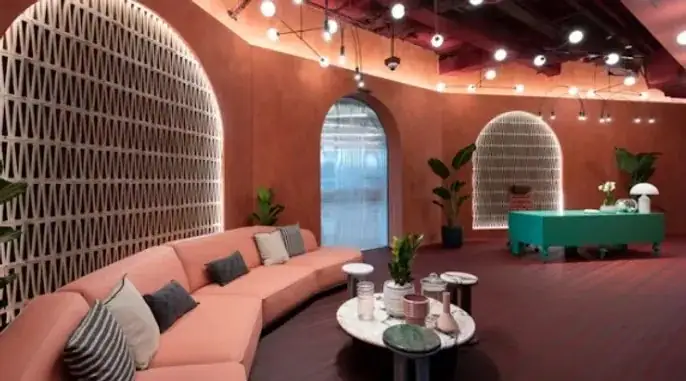
Beyond indoor plants, designers often introduce natural textures, daylight strategies, and open spatial layouts that make interiors feel calm and breathable.
These elements contribute to comfort and reduced stress levels.
Technology That Supports Community
Technology plays an important role in the operation of co-working spaces.
Digital booking platforms, automated access systems, meeting room scheduling tools, and hybrid meeting technology help members use the space efficiently while supporting collaboration.
Trends Affecting All Commercial Spaces
Thoughtful Material Choices
Designers are increasingly evaluating materials based on long-term performance rather than appearance alone.
Durability, maintenance requirements, health impact, and lifecycle cost are now key considerations during material selection.
Inclusive and Accessible Environments
Accessibility is becoming a central design principle rather than a regulatory requirement.
Spaces designed with inclusive thinking tend to be easier and more comfortable for everyone to use.
Sensory Comfort
Modern commercial interiors pay closer attention to sensory factors.
Acoustic comfort, glare reduction, tactile materials, and balanced color palettes all influence how people experience a space.
These elements can significantly affect mood and productivity.
Lighting With Multiple Functions
Lighting is now expected to support more than visibility.
It contributes to atmosphere, navigation, brand identity, energy efficiency, and workplace productivity. Carefully planned lighting strategies can transform the overall experience of a space.
Circulation as Part of the Experience
The way people move through a space is now treated as a design element in itself.
Designers consider the sequence of visual moments, where people naturally pause, and how different areas feel public or private. This approach helps shape how visitors experience the environment.
How Designers Combine Practicality and Creativity
Starting With Operational Goals
Effective commercial design begins with understanding how a business operates.
Workflows, customer journeys, and team interactions inform how the layout should function before aesthetic decisions are made.
Collaboration Between Multiple Teams
Commercial interior projects often involve collaboration between designers, operations teams, IT specialists, and branding professionals.
This cooperation ensures that technology, branding, and space planning work together smoothly.
Testing Ideas Before Full Implementation
Many designers now test ideas through pilot areas or prototype layouts.
This process helps teams identify potential problems early and align stakeholders before committing to final construction.
Evaluating Performance After Completion
Once a project is complete, reviewing how the space performs provides valuable insights.
Measuring utilization, comfort, and operational efficiency helps organizations refine future projects and avoid repeating mistakes.
Practical Advice for Businesses Planning Commercial Interiors
Begin With Purpose
Start by defining what the space should achieve. Whether the goal is collaboration, customer engagement, or productivity, design decisions should support that outcome.
Plan for Adaptability
Teams evolve, retail campaigns change, and business strategies shift. Flexible layouts make it easier to adjust without major renovations.
Identify Clear Success Metrics
Businesses benefit from defining measurable outcomes such as improved employee satisfaction, longer customer dwell time, faster service, or increased sales conversion.
Design choices should support those objectives.
Focus on Comfort and Belonging
People naturally stay longer in spaces where they feel comfortable and welcomed. Creating that sense of belonging has real business value.
Use Technology Where It Simplifies Things
Technology works best when it removes friction. Booking systems, access control, and meeting technology often provide meaningful improvements.
If a digital feature complicates operations instead of improving them, it may not be necessary.
Conclusion
For businesses looking to implement these ideas effectively, working with a luxury interior design company in India can ensure both creativity & execution quality.

Co-Founder & Principal Designer at Studio Interplay
Palak approaches design as a dialogue between space and emotion. With a deep appreciation for materiality and detail, she creates interiors that reflect the people who inhabit them rather than the trends of the moment.