Quick Navigation
A wardrobe is one of those things you interact with every single day, sometimes multiple times. And yet, it’s almost always treated as an afterthought in the bedroom design process. Chosen quickly, installed without much thought, and then quietly resented for years because nothing quite fits the way it should.
If you’re designing or redesigning a bedroom, getting the wardrobe right deserves as much attention as anything else in the room. Modular wardrobe designs have made this significantly more achievable, offering flexibility, precision, and a finished quality that traditional carpentry often struggles to match.
Here’s everything you need to know before making a decision.
Why Modular Wardrobe Designs Make Sense for Modern Bedrooms
Modular wardrobes are built from pre-engineered components, carcasses, shutters, internal fittings, and hardware that are assembled to suit your specific space and storage needs. Unlike traditional on-site carpentry, modular systems are manufactured under controlled conditions, which means tighter tolerances, better finishes, and hardware that actually performs over time.
The real advantage, though, is personalisation within a system. You’re not choosing from a fixed catalogue: you’re configuring a solution around your room dimensions, your storage requirements, and your aesthetic preferences. The result can look completely bespoke while benefiting from the consistency of industrial manufacturing.
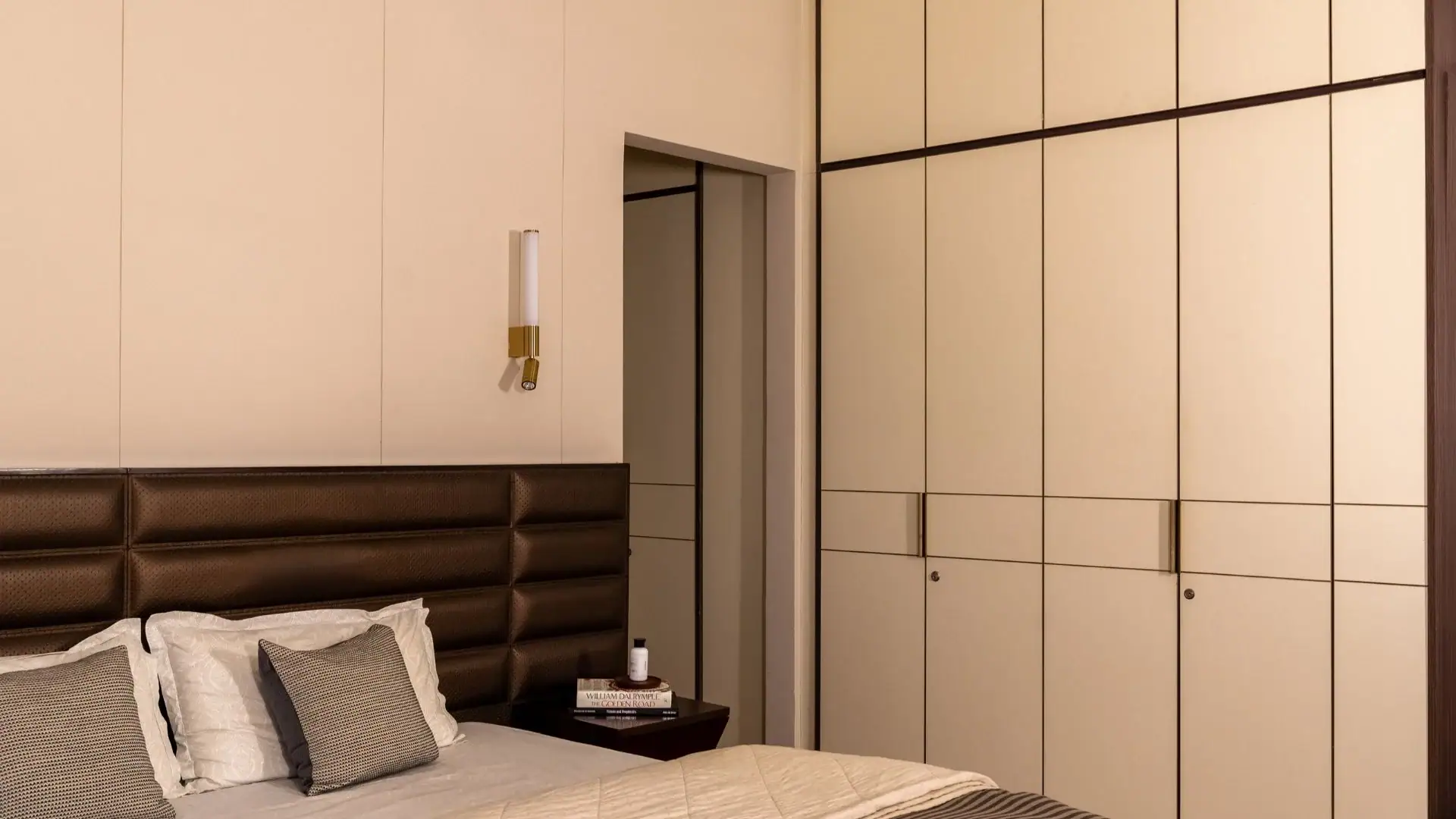
For bedrooms in modern apartments and homes, where space is often at a premium, modular wardrobe designs also make better use of available volume. Floor-to-ceiling configurations, under-beam solutions, and corner units can be specified with precision that site-built carpentry rarely achieves cleanly.
Types of Modular Wardrobe Designs: What Works Where
Understanding the main wardrobe typologies helps you make the right call for your bedroom’s size and layout.
Sliding Door Wardrobes: The most space-efficient option for compact bedrooms. Because the doors don’t swing open, they work well against walls opposite beds or in rooms where clearance is limited. The track system and panel quality make a significant difference to long-term performance.
Hinged Door Wardrobes: The classic configuration. Hinged doors offer full, unobstructed access to the interior, which matters more than it seems when you’re getting dressed in a hurry. Best suited to bedrooms with sufficient clearance in front of the unit.
Walk-In Wardrobes: When space allows, a walk-in wardrobe transforms the bedroom experience entirely. It shifts storage out of the sleeping area and creates a dedicated dressing zone. Even a relatively modest walk-in, 4 to 5 feet deep, makes a meaningful difference.
Open Wardrobe Systems: Increasingly popular in contemporary and Japandi-influenced bedrooms, open systems work beautifully when your wardrobe content is curated. They require discipline to maintain, but add a visual lightness that closed units don’t.
Internal Configuration: Where Most People Go Wrong
The exterior of a wardrobe, the shutter finish, the handle choice, and the overall form are what most people focus on. The interior is where the wardrobe either works or doesn’t.
Getting the internal configuration right means thinking through:
Hanging space: Long hang (full-length dresses, coats) versus short hang (shirts, jackets) in the right proportion for what you actually own. Most wardrobes significantly under-provision long hang.
Drawer depth and count: Folded clothing, innerwear, and accessories all need drawer space. Deep drawers with dividers are far more functional than shelves for most of these categories.
Shelf height: Adjustable shelves matter. Fixed shelves at the wrong height create dead space that slowly accumulates clutter.
Accessory fittings: Pull-out trouser racks, tie and belt organisers, pull-down hanging rails for high sections, velvet-lined jewellery drawers – these aren’t luxury additions. For anyone who owns a reasonable wardrobe’s worth of clothing, they’re genuinely practical.
At Studio Interplay, the wardrobe design process begins with a detailed conversation about how a client actually uses their storage – not just how large their wardrobe needs to be. This upstream thinking is what produces interiors that continue working well years after handover.
Materials and Finishes That Define Wardrobe Quality
The finish of a wardrobe sets the tone for the entire bedroom. Common options include:
Membrane and PU finishes give a clean, matte or semi-matte look that photographs well and ages gracefully. These are the most popular choices in contemporary bedroom design.
Acrylic delivers high gloss and a sense of depth – striking in the right setting, but it shows fingerprints and requires more upkeep.
Laminate has improved considerably in quality and texture range. Good-quality laminate with a well-finished edge profile can look excellent and hold up to daily use.
Glass shutters – frosted, fluted, or clear – add visual interest and work particularly well in larger bedrooms or walk-in configurations.
Hardware is equally important. Soft-close hinges, smooth drawer runners, and well-weighted handles are things you feel every day. Cutting corners here is a decision you’ll notice for as long as the wardrobe exists.
How Studio Interplay Approaches Wardrobe Design
Studio Interplay is a founder-led luxury interior design studio based in Gurugram. The expert designers treat wardrobe design as an integral part of the bedroom, not a separate line item. Every wardrobe they design is considered in the context of the room’s proportions, material palette, and the way natural light moves through the space.
The process covers everything from 3D visualisation and precise material specification to manufacturing oversight and installation, with transparent timelines and budgets from the very first conversation. Clients across Delhi NCR consistently highlight the same outcome: a finished bedroom that feels cohesive, considered, and genuinely personal.
If you’ve ever lived with a wardrobe that didn’t quite work – wrong configuration, cheap hardware, a finish that didn’t age well – you already know the difference a well-designed one makes.
Your Bedroom Deserves a Wardrobe That’s Designed for You
A wardrobe is too central to your daily routine to be an afterthought. When it’s designed with the same care as the rest of your bedroom, right layout, right materials, right internal organisation, it stops being a storage unit and becomes a space that genuinely makes your mornings easier, and your room feel complete.
Studio Interplay designs wardrobes and bedrooms that work together, look exceptional, and hold up beautifully over time. If you’re planning a bedroom that deserves to be done properly, the conversation starts here.
Frequently Asked Questions
Q1: What is the average cost of modular wardrobe designs in India?
Costs depend on the size, material choices, internal fittings, and hardware specification. Studio Interplay provides a transparent, itemised estimate from the first consultation – so there are no surprises mid-project.
Q2: How long does it take to design and install a modular wardrobe?
From design sign-off to installation, most modular wardrobes take 4 to 7 weeks depending on complexity. Studio Interplay manages the full process and keeps you informed throughout.
Q3: Can modular wardrobe designs work in odd-shaped or small bedrooms?
Absolutely, Modular systems are highly adaptable – sloped ceilings, recessed alcoves, and compact rooms can all be addressed with precise configuration. This is one of the key advantages over fixed, site-built carpentry.

Co-Founder & Principal Designer at Studio Interplay
Palak approaches design as a dialogue between space and emotion. With a deep appreciation for materiality and detail, she creates interiors that reflect the people who inhabit them rather than the trends of the moment.